Image 1 of 2
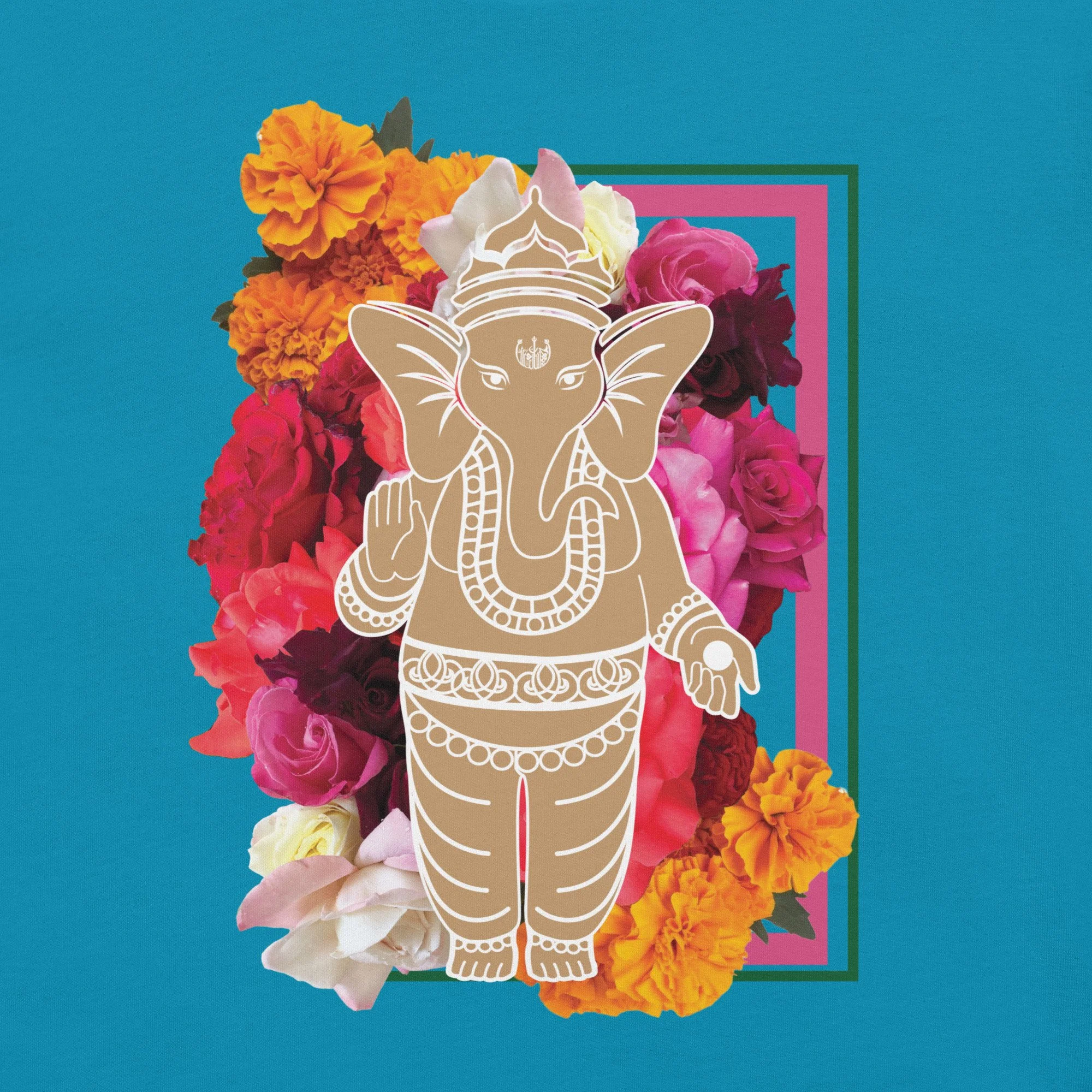 Image 2 of 2
During my travels through Mexico City, I was fascinated to discover Lord Ganesha and numerous other Hindu deities embraced throughout the city, alongside Mesoamerica's own rich spiritual traditions, the Aztec, Olmec, and Toltec, whose elaborate temples, complex writing systems, and stunning artistic traditions parallel the diversity of South Asia, though much of that heritage was lost to colonization.
That unexpected encounter sent me searching for the historical and spiritual connections between these two worlds.
Although marigolds are widely associated with India today, they were originally cultivated in Mexico by the Aztec civilization before spreading across the world, and even within Hinduism, its meaning shifts by region.
In North India, marigolds are commonly offered in worship, while South Indian temples and other houses of worship, they are not allowed due to their association with ancestor remembrance, spaces of worship are associated with happiness and peace, so anything evoking death or mourning is kept out. Ancestor reverence is very prevalent in South Indian Hindu traditions compared to the North.
This distinction echoes Mexico's Día de los Muertos, where marigolds also honor those who have passed.
South India has a long tradition of religious interconnectedness, with people of different faiths often visiting one another's houses of worship. A South Indian Muslim friend taught me that marigolds are not allowed for use in worship (though allowed for decoration) across many South Indian religious traditions.
The artwork reimagines Lord Ganesha through the bold, flat compositions, linear forms, and negative space characteristic of Mesoamerican rock-cut sculpture, surrounded by vibrant marigolds and hand-selected roses from my own garden, roses being the flower more commonly offered in Hindu puja (prayer rituals) for their fragrance and beauty.
Look closer and the visual kinship deepens: Mesoamerica's "maize deity" is often depicted with one hand raised in blessing and one grounded, a gesture strikingly similar to Hindu iconography, and serpents (nagas) recur as sacred symbols across both traditions.
Drawing on museum research, lived cultural experience, and Faith & Culture Intelligence,
the design uncovers unexpected connections between civilizations often viewed as entirely separate, inviting us to appreciate the remarkable journeys of art, faith, and cultural exchange across the world.
Print Details:
• 100% combed and ring-spun cotton (Heather colors contain polyester)
• Fabric weight: 4.2 oz./yd.² (142 g/m²)
• Pre-shrunk fabric
• Side-seamed construction
• Shoulder-to-shoulder taping
• Wash Inside Out - Print is Photo Realistic
VIEW SIZE CHART
Made to order: This item is produced specifically for you. Please review sizing carefully, as we are unable to offer returns or exchanges.
Please allow 8-15 business days for production and shipping
During my travels through Mexico City, I was fascinated to discover Lord Ganesha and numerous other Hindu deities embraced throughout the city, alongside Mesoamerica's own rich spiritual traditions, the Aztec, Olmec, and Toltec, whose elaborate temples, complex writing systems, and stunning artistic traditions parallel the diversity of South Asia, though much of that heritage was lost to colonization.
That unexpected encounter sent me searching for the historical and spiritual connections between these two worlds.
Although marigolds are widely associated with India today, they were originally cultivated in Mexico by the Aztec civilization before spreading across the world, and even within Hinduism, its meaning shifts by region.
In North India, marigolds are commonly offered in worship, while South Indian temples and other houses of worship, they are not allowed due to their association with ancestor remembrance, spaces of worship are associated with happiness and peace, so anything evoking death or mourning is kept out. Ancestor reverence is very prevalent in South Indian Hindu traditions compared to the North.
This distinction echoes Mexico's Día de los Muertos, where marigolds also honor those who have passed.
South India has a long tradition of religious interconnectedness, with people of different faiths often visiting one another's houses of worship. A South Indian Muslim friend taught me that marigolds are not allowed for use in worship (though allowed for decoration) across many South Indian religious traditions.
The artwork reimagines Lord Ganesha through the bold, flat compositions, linear forms, and negative space characteristic of Mesoamerican rock-cut sculpture, surrounded by vibrant marigolds and hand-selected roses from my own garden, roses being the flower more commonly offered in Hindu puja (prayer rituals) for their fragrance and beauty.
Look closer and the visual kinship deepens: Mesoamerica's "maize deity" is often depicted with one hand raised in blessing and one grounded, a gesture strikingly similar to Hindu iconography, and serpents (nagas) recur as sacred symbols across both traditions.
Drawing on museum research, lived cultural experience, and Faith & Culture Intelligence,
the design uncovers unexpected connections between civilizations often viewed as entirely separate, inviting us to appreciate the remarkable journeys of art, faith, and cultural exchange across the world.
Print Details:
• 100% combed and ring-spun cotton (Heather colors contain polyester)
• Fabric weight: 4.2 oz./yd.² (142 g/m²)
• Pre-shrunk fabric
• Side-seamed construction
• Shoulder-to-shoulder taping
• Wash Inside Out - Print is Photo Realistic
VIEW SIZE CHART
Made to order: This item is produced specifically for you. Please review sizing carefully, as we are unable to offer returns or exchanges.
Please allow 8-15 business days for production and shipping