Concept :
This design features one of the most celebrated devotional prints in Indian art history: Subramanian and His Wives, Mahavalli and Devasena by Raja Ravi Varma, one of the greatest Indian painters of all time. This print was featured in the exhibition Household Gods: Hindu Devotional Prints, 1860–1930 at The Metropolitan Museum of Art.
About the Deity
Lord Muruga, also known as Subramanian, Kartikeya, and Shanmukha among his many names, is one of Hinduism's most beloved deities. In Hinduism, every deity has multiple names, each name holds deep spiritual significance. He is revered as the lord of war but is compassion and wisdom. Lord Muruga is uniquely tied to Tamil, as it’s believe he gave Tamil people their language which is the oldest living language in the world, just as Hinduism is considered the oldest living faith tradition.
The number 6 is sacred to Muruga: six divine faces, six names, and six holy pilgrimage sites in Tamil Nadu known as the Arupadaiveedu.
Wherever Tamil people and diaspora communities are found around the world, you will find his worship. Lord Muruga is beloved across faiths, Tamil Muslims, Christians, Sikhs, and Jews alike hold him as part of their shared cultural heritage. He is a deity who welcomes and unites all.
Lord Muruga was born from six sparks that emerged from Lord Shiva. Agni, the God of Fire, carried the sparks through the forest of reeds but they burned so intensely he dropped them into the sacred river Ganga, where they blossomed into six lotuses, each holding a baby. The Krittikas, celestial nymphs known in Western astronomy as the Pleiades, nursed the six infants. When Goddess Parvati gathered them into her arms, they merged into one child with six faces.
Every divine parent claimed him as their own and so Lord Shiva gave him six names, one for each:
1. Mahasena — son of Agni, God of Fire
2. Sharavana — son of the Goddess of the Forest
3. Kumara — son of the sacred river Goddess Ganga
4. Kartikeya — son of the Krittikas
5. Skanda — son of Goddess Parvati
6. Guha — son of Lord Shiva
The spiritual significance is: the divine belongs to all, no matter what name you call him.
About the Design
This piece pairs Ravi Varma's devotional print with the Tamil “Om” symbol and an opening line from a song dedicated to Lord Muruga by the Tamil yogi and composer Guru Surajananda, who lived in Chennai and passed in September 1992. The lyric “Muruganin Maru Peyar Azhagu” ("Another Name for Muruga is Beauty") speaks of how the beauty and smile of Lord Muruga enchants the world. Both the Tamil script and English translation are included in the design.
Why This Design Exists
This piece was created because representation matters. As the Hindu chaplain / founder of NYU's Hindu Center, daughter of a USA Hindu temple builder, and former head product designer for the Metropolitan Museum of Art, I was invited to speak by the curator (Dr. John Guy, a dear close friend, mentor of mine) of Household Gods: Hindu Devotional Prints, 1860–1930 for their Expert Talk Series.
I wanted to create a product line to celebrate the exhibition with my own design sensibility, because understanding the stories behind sacred art leads to deeper appreciation, connection, cultural and faith literacy. This piece was created to honor one of Hinduism's most cherished deities and share Tamil heritage with a global audience.
—Sangeetha Kowsik (Founder / Creative Director , Ihsan Ishan Design)
Product Details:
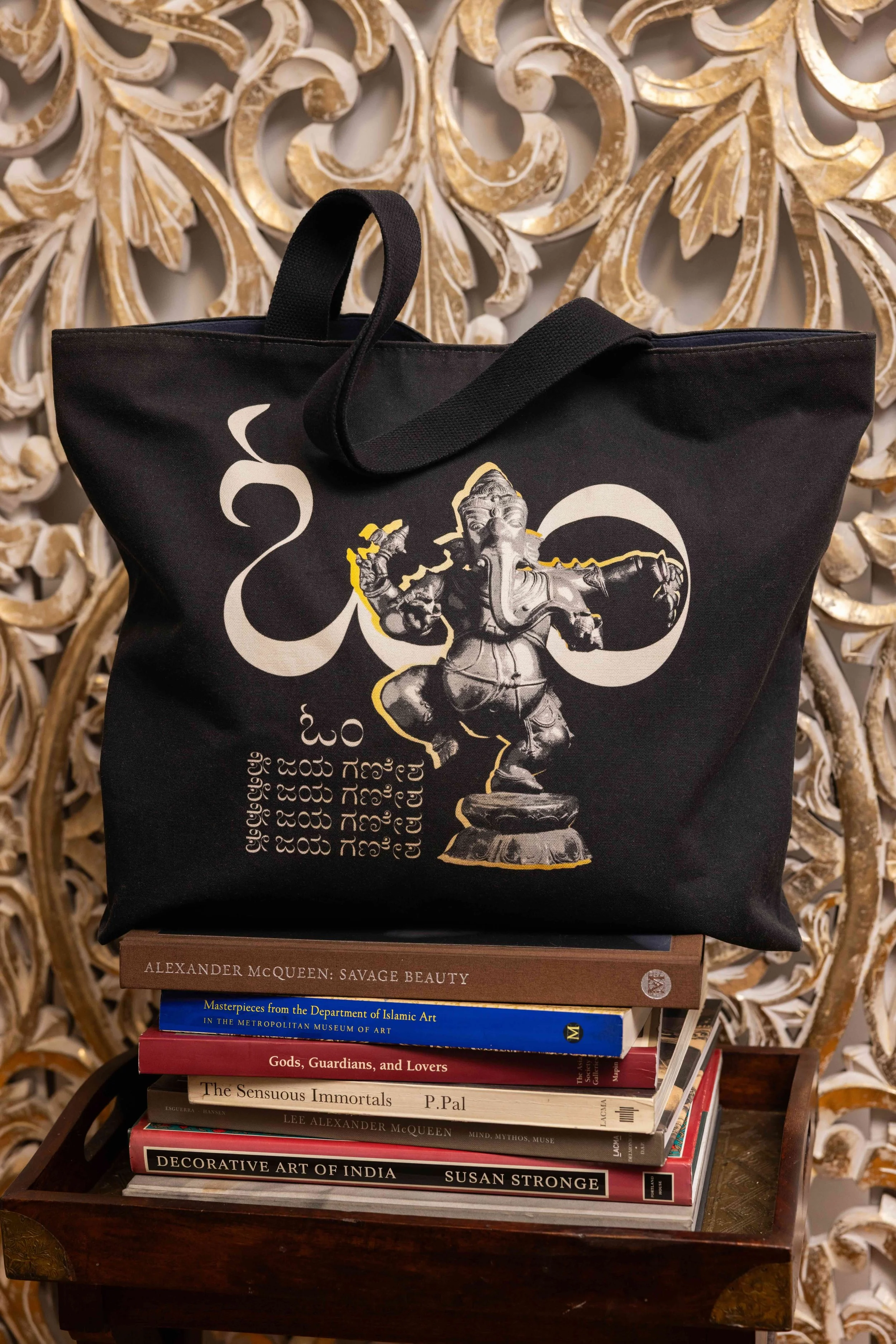
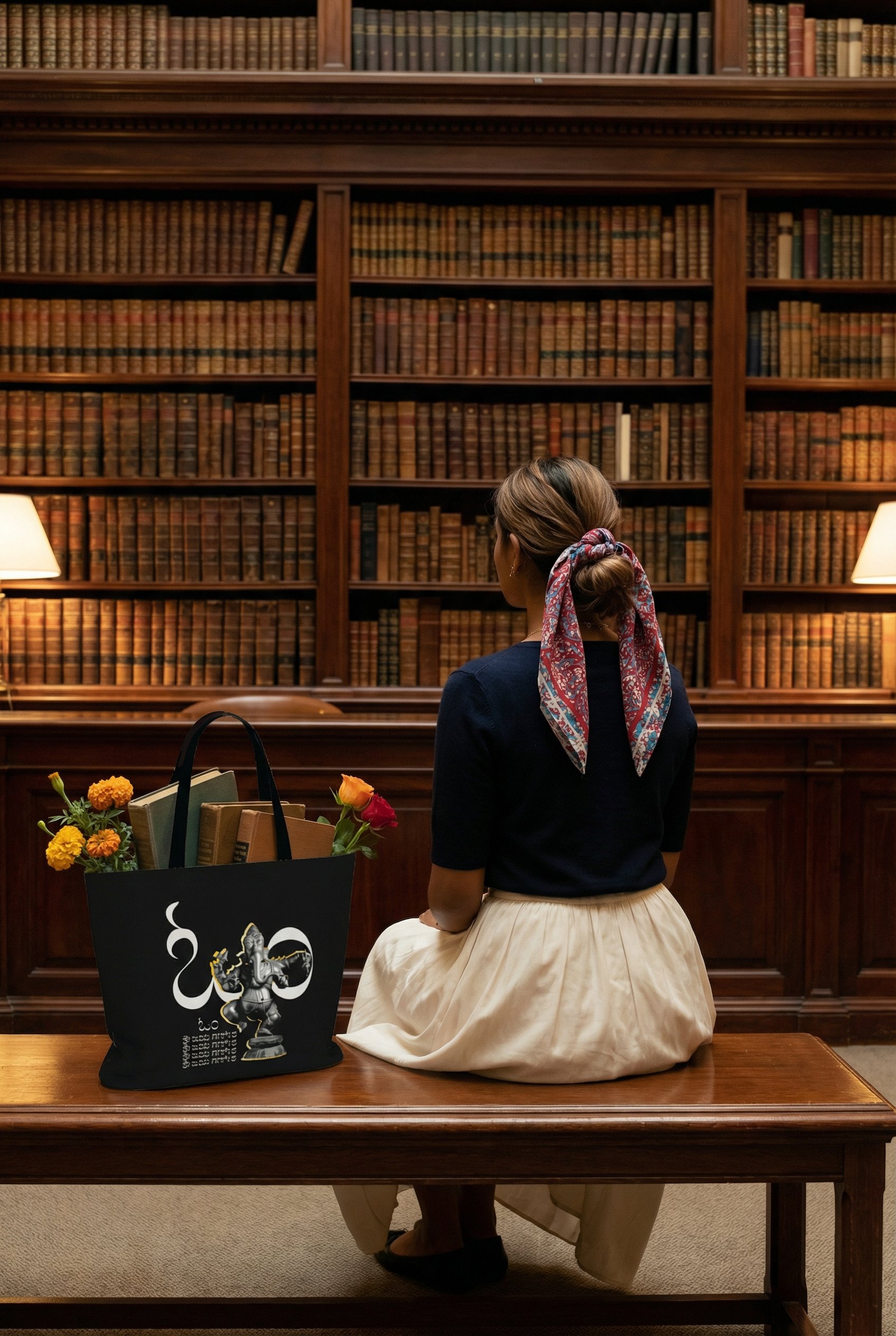
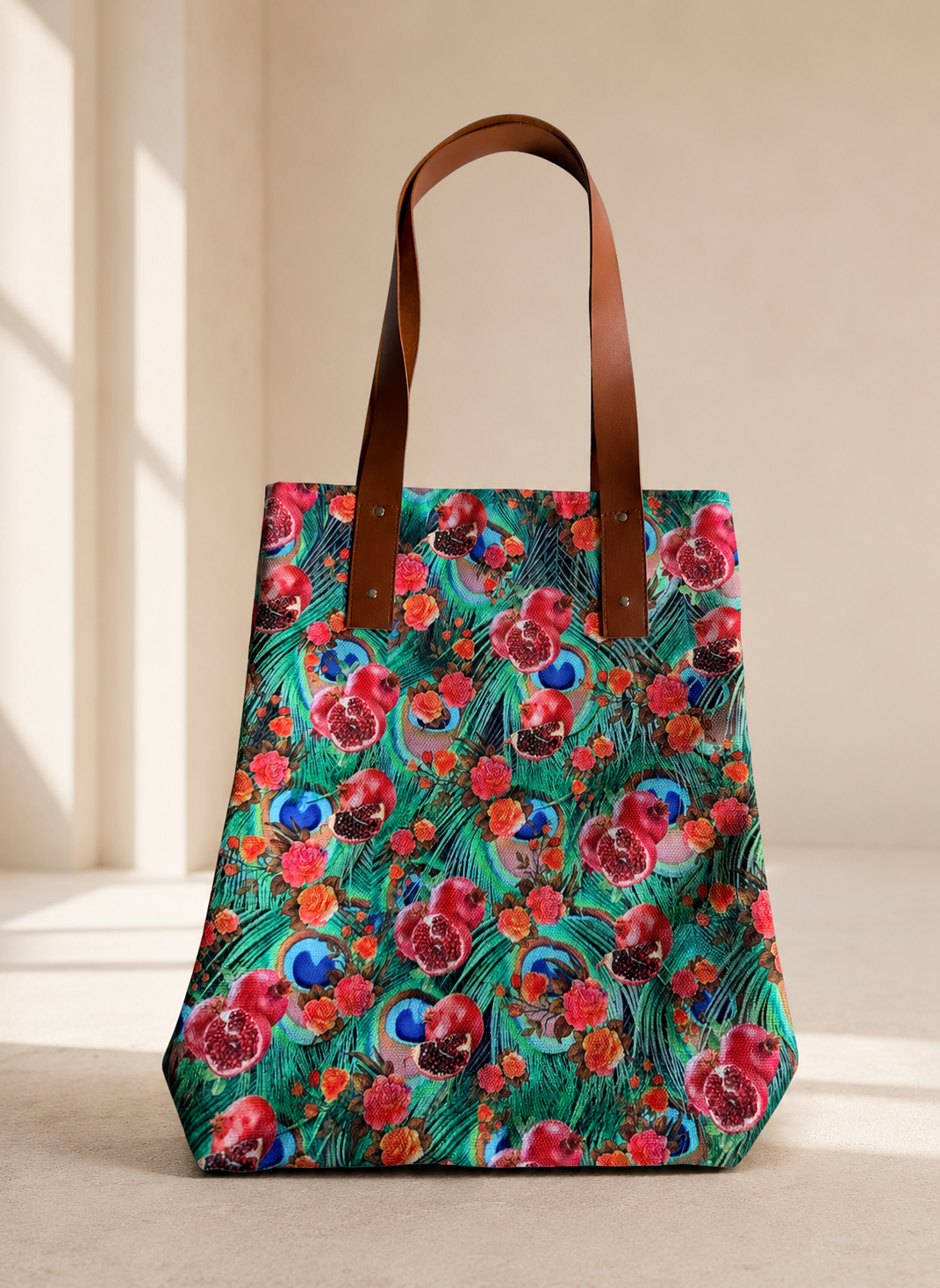
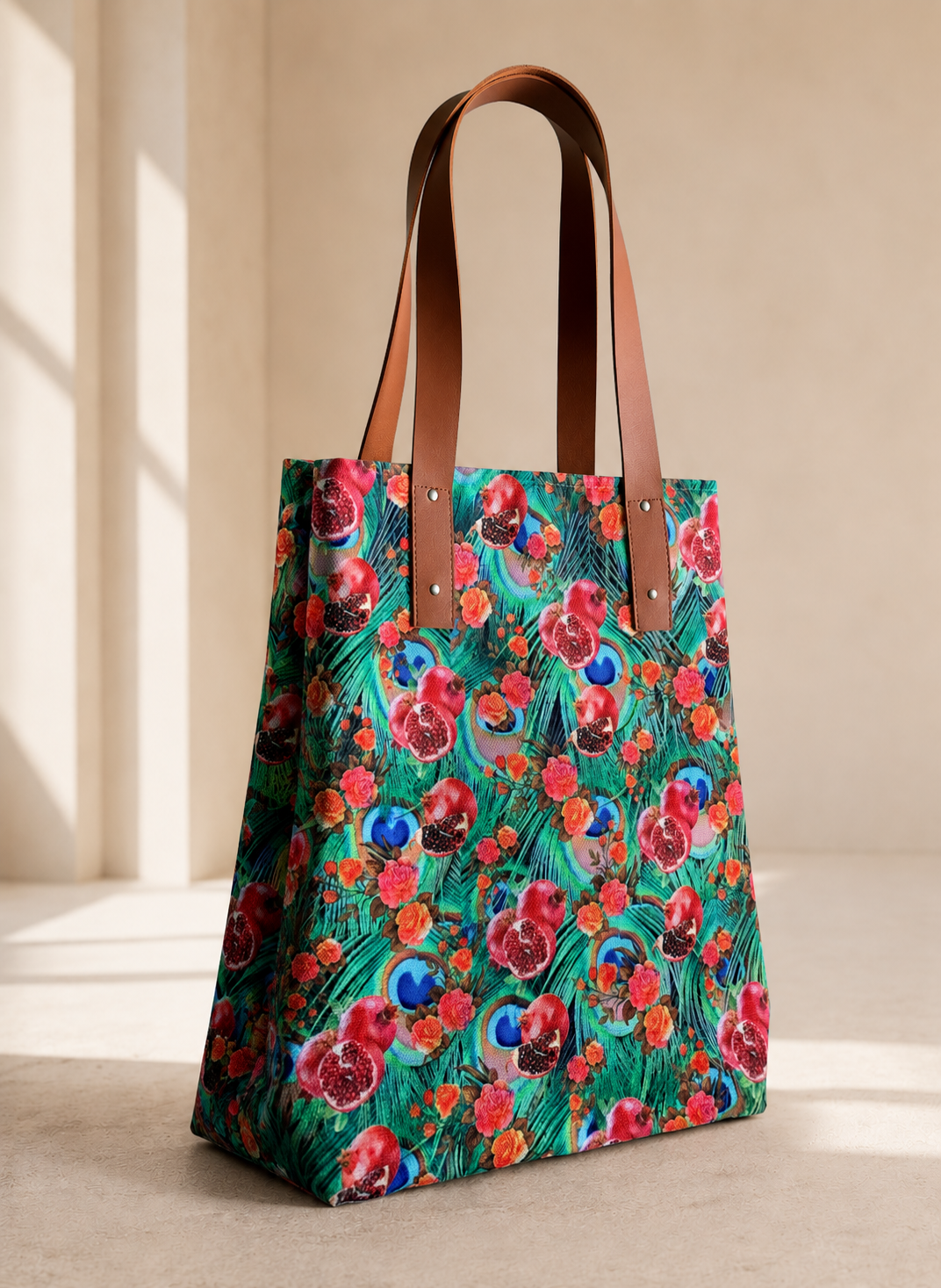
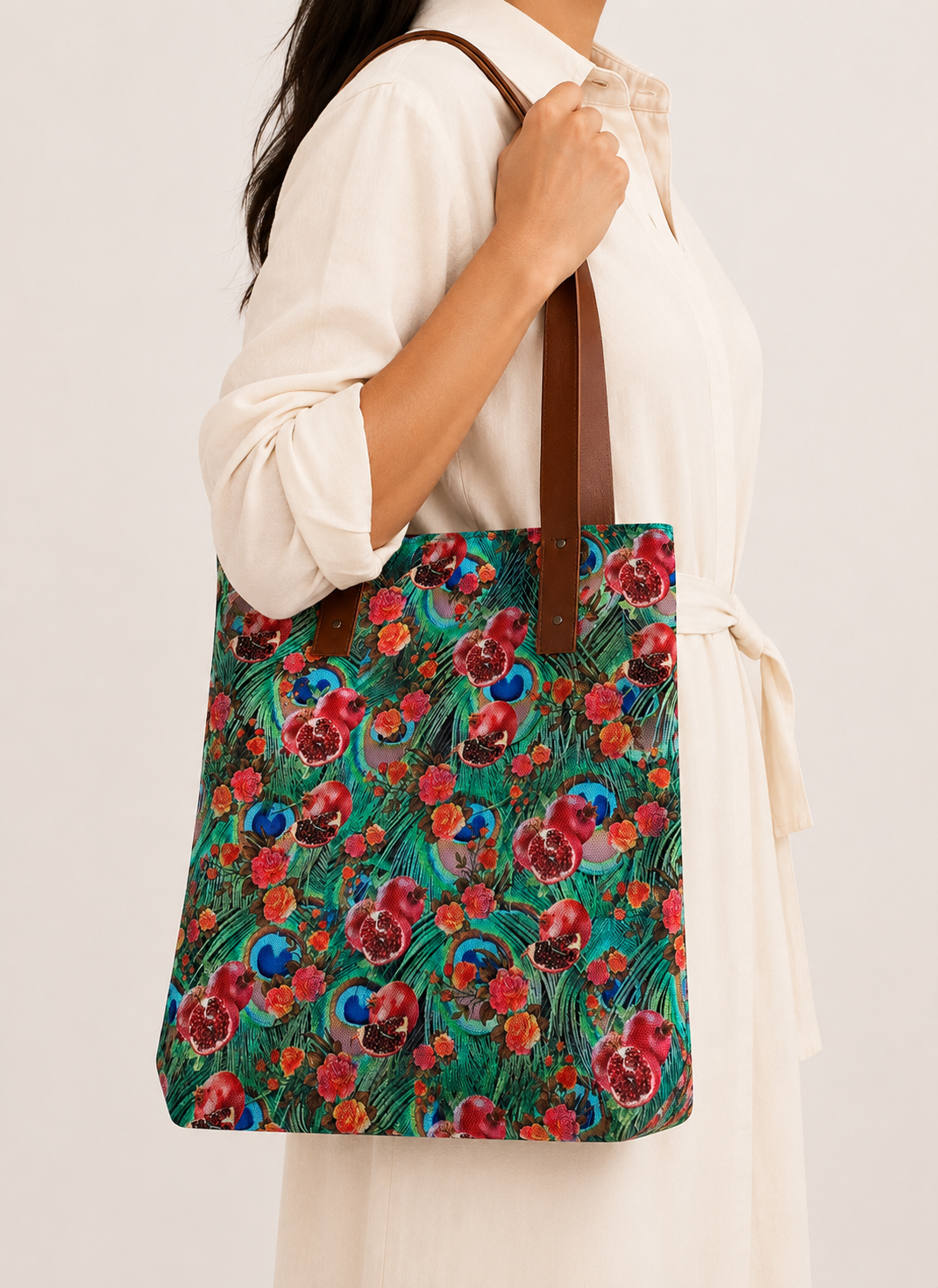
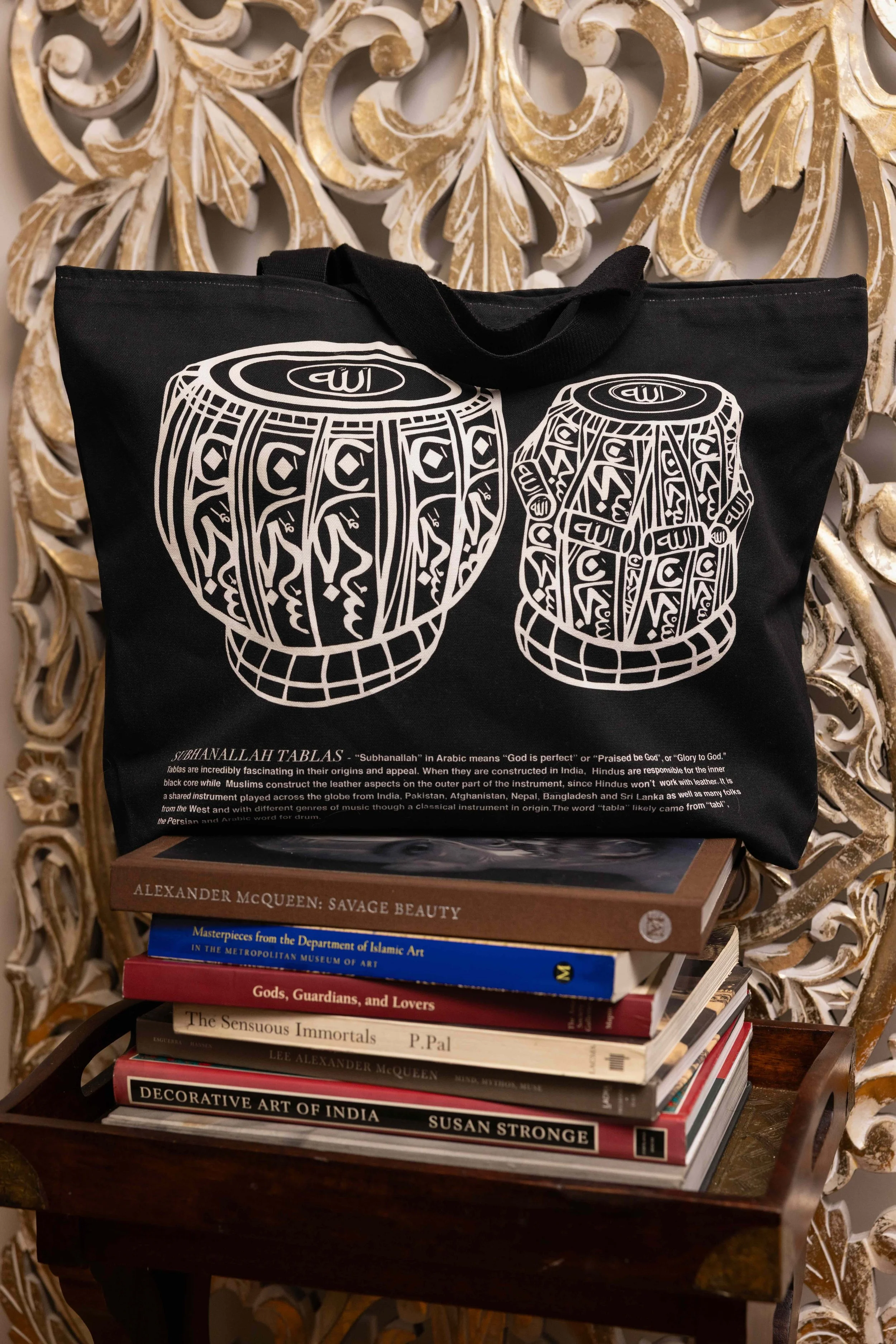
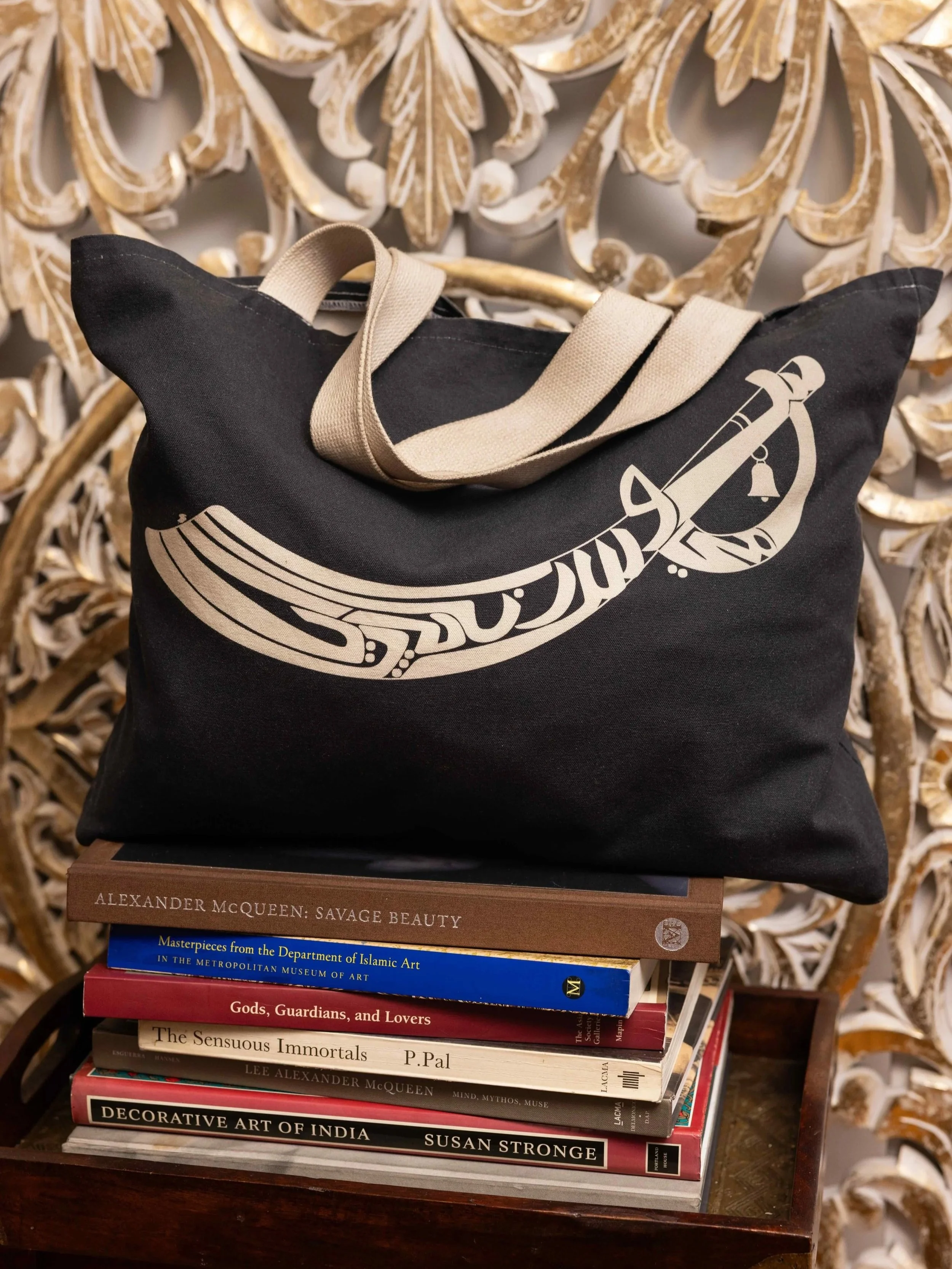
• Made from Cotton Canvas
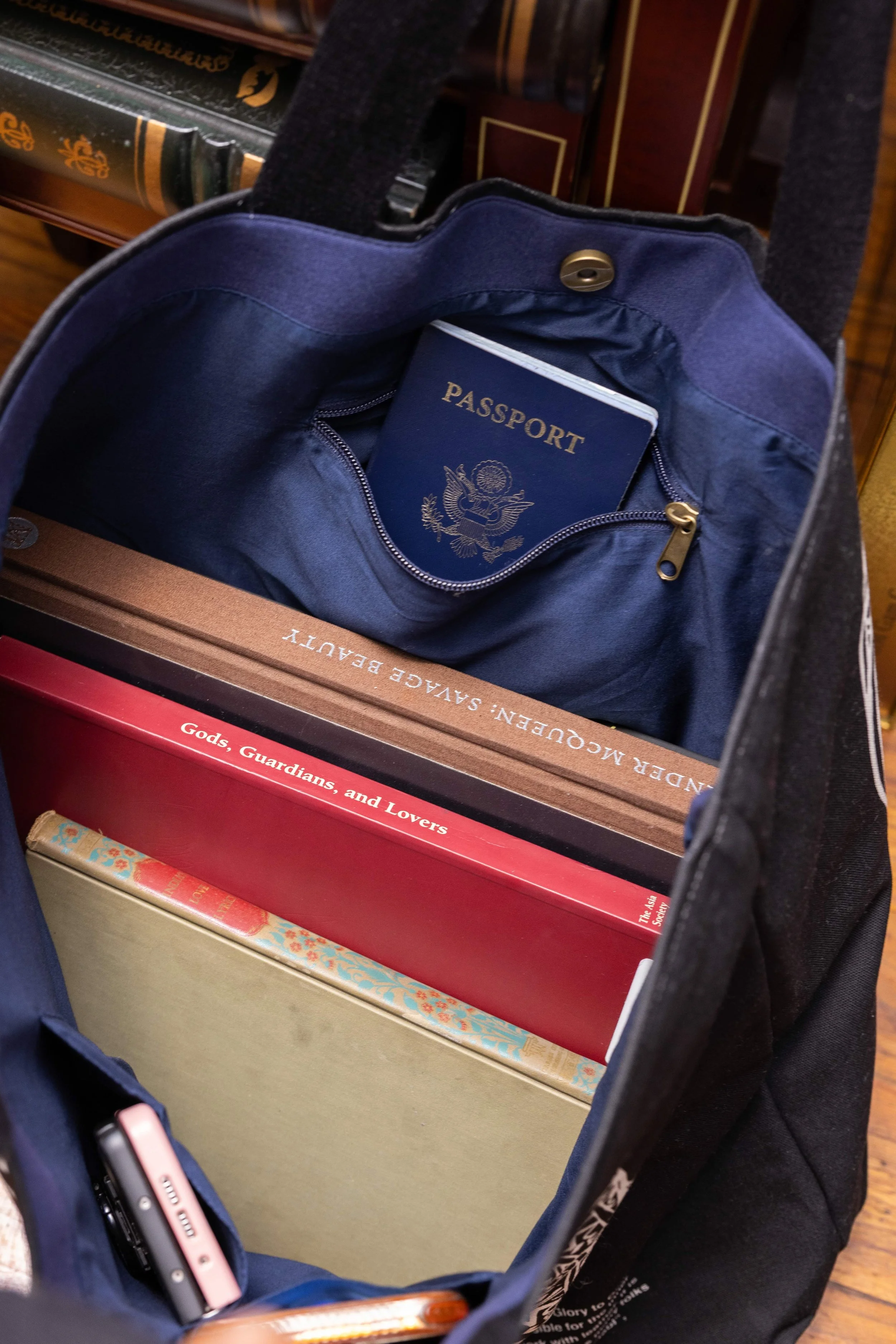
• Functional, oversized dimensions of 20” wide, 15” tall and 4” deep
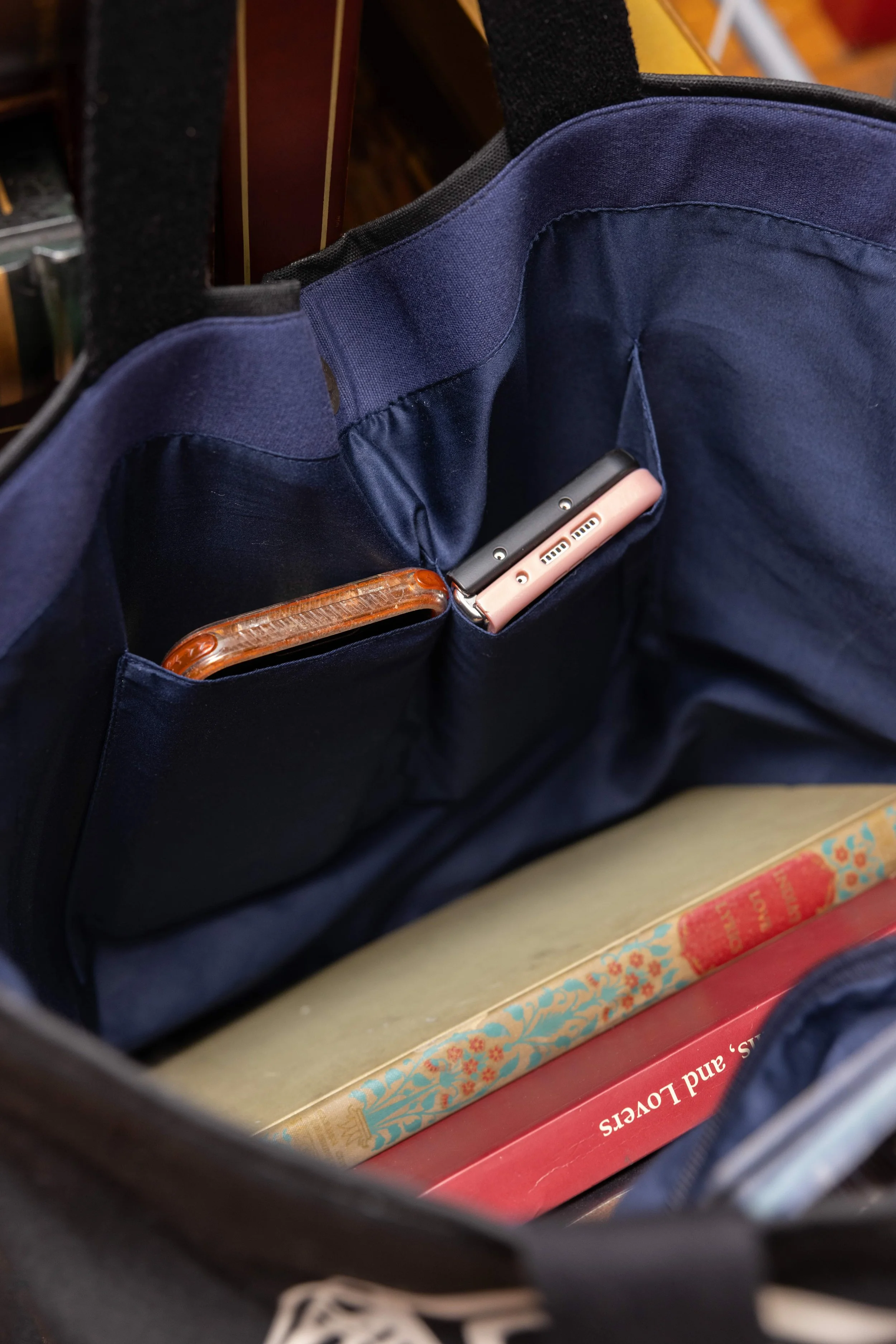
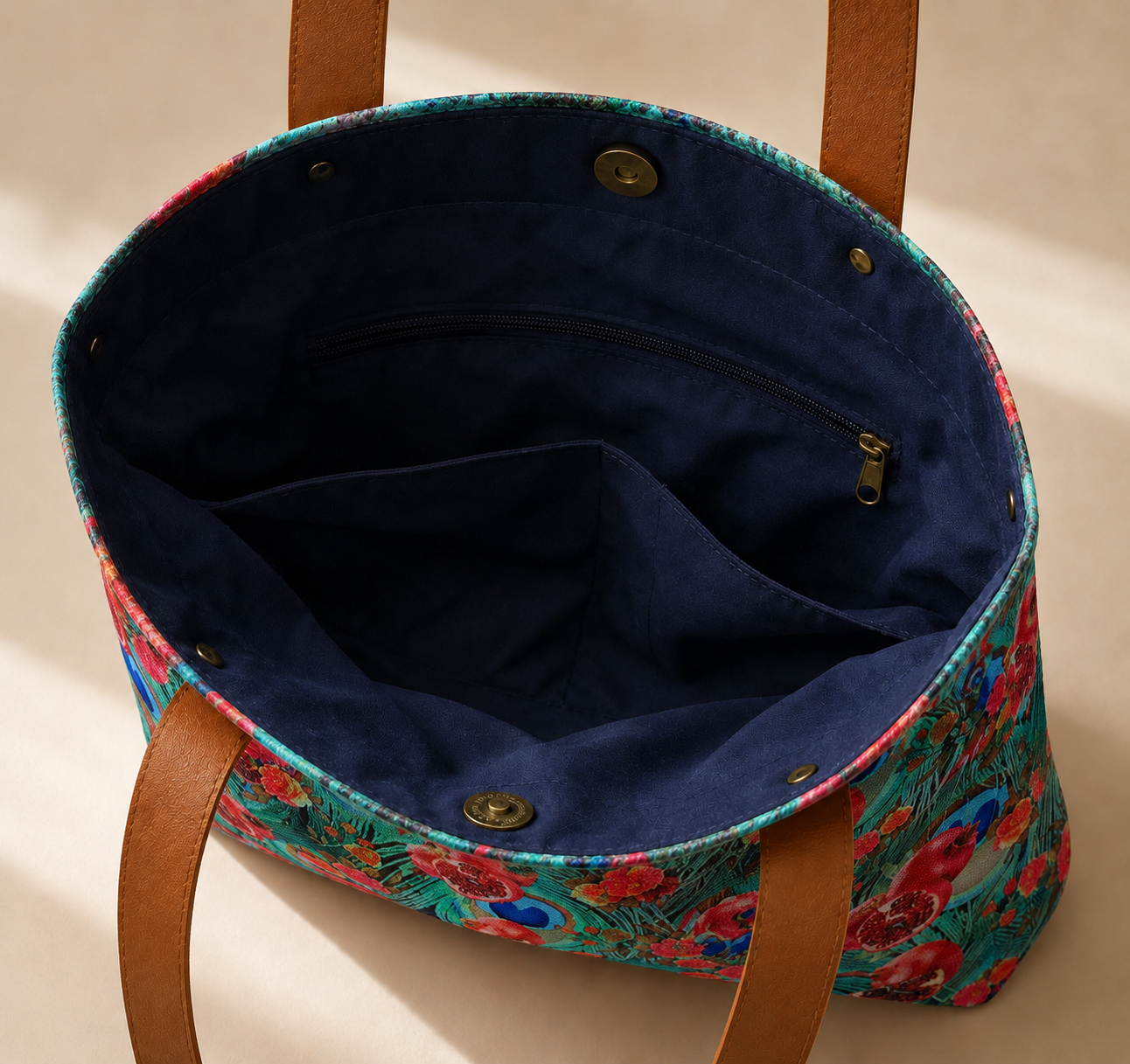
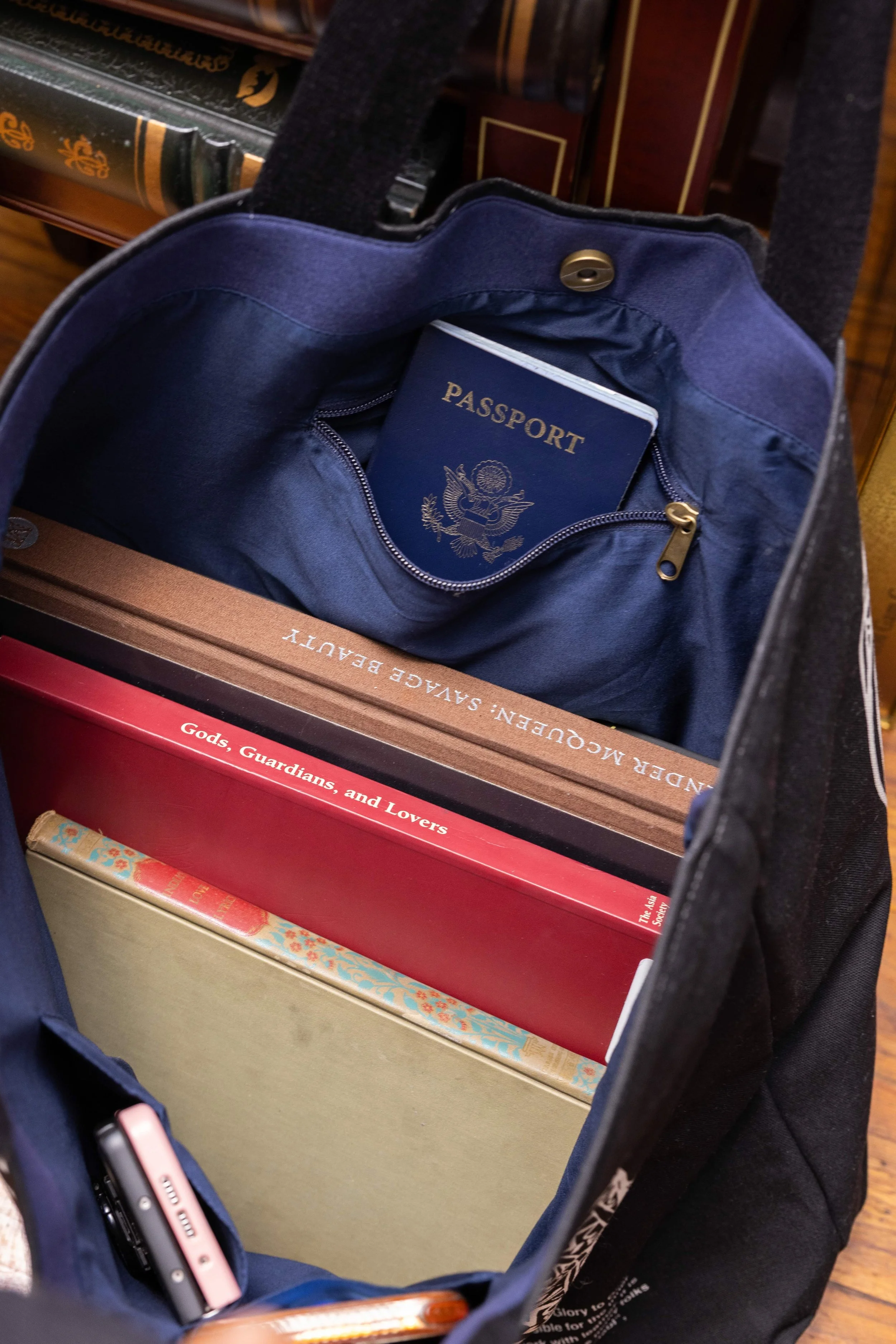
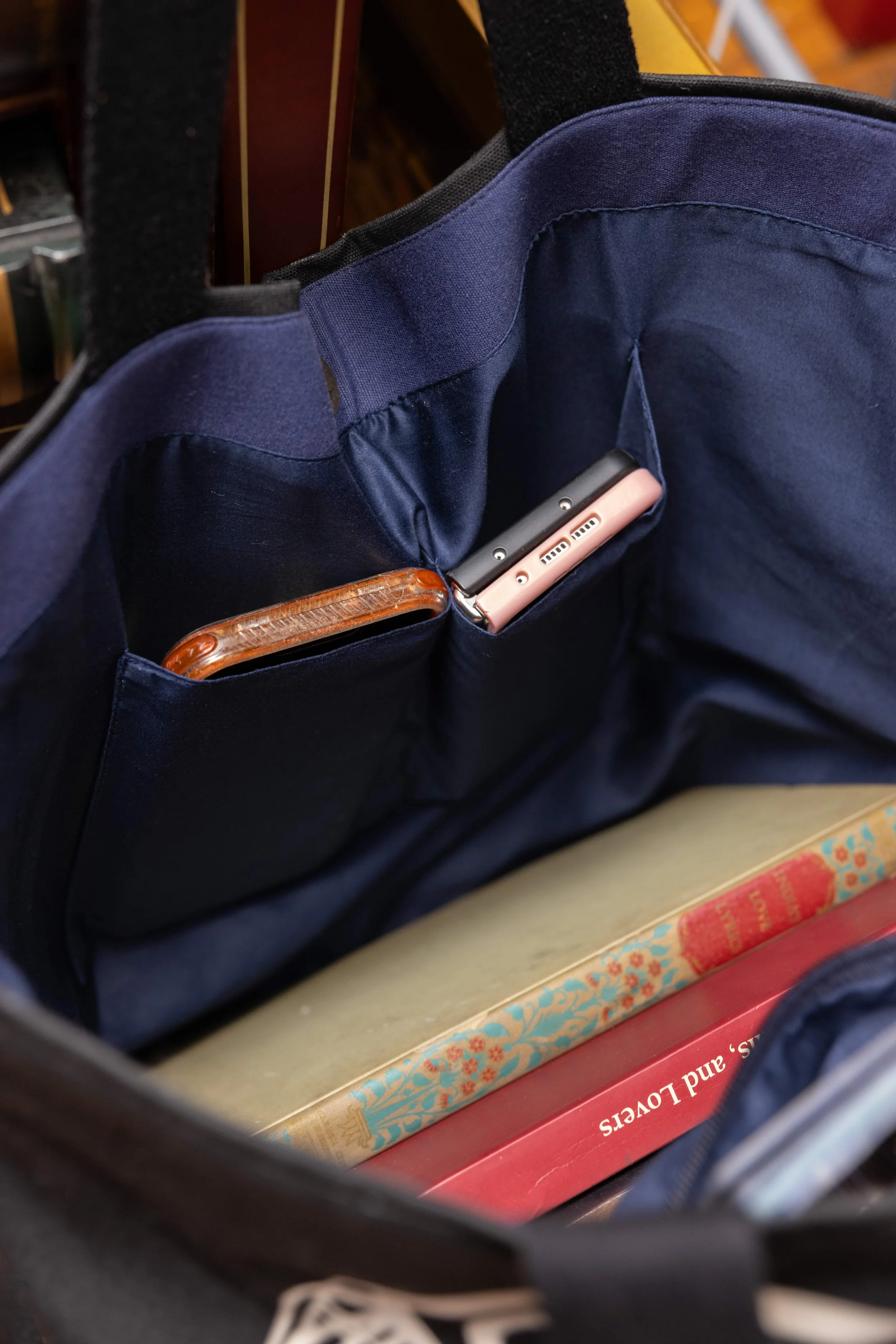
• Navy blue inner liner with 1 zipper pocket and 1 double pocket for organization
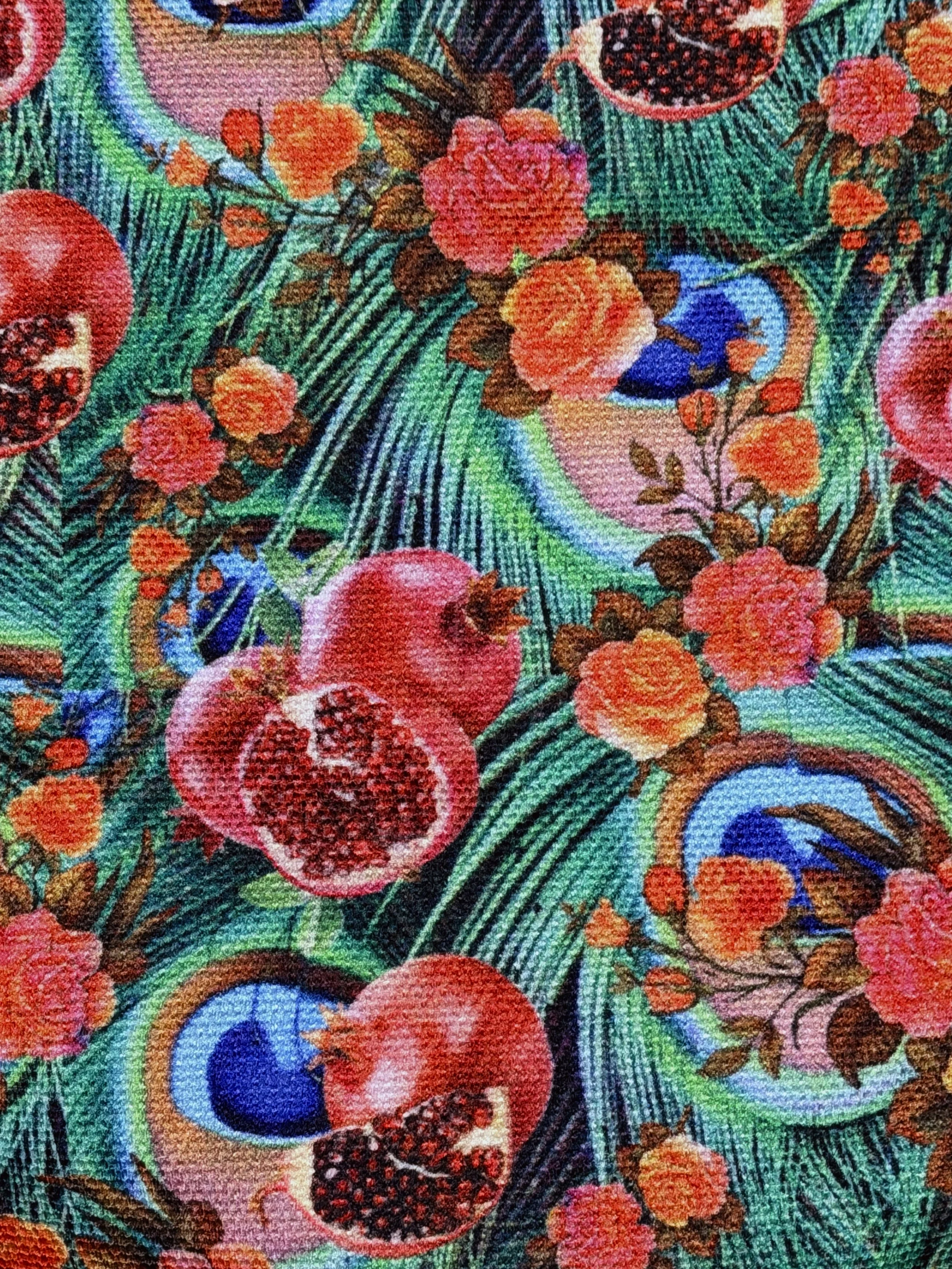
• Digitally printed with permanent reactive inks for vibrant full exterior print
• 1.5” wide cotton webbing straps in black
• Machine Washable (Inside out gentle cycle)
Made to order: This item is produced specifically for you. Please review carefully, as we are unable to offer returns or exchanges. Please allow 10-15 days from production and fulfillment.
Making products on demand instead of in bulk helps reduce overproduction, so thank you for making thoughtful purchasing decisions!
Concept :
This design features one of the most celebrated devotional prints in Indian art history: Subramanian and His Wives, Mahavalli and Devasena by Raja Ravi Varma, one of the greatest Indian painters of all time. This print was featured in the exhibition Household Gods: Hindu Devotional Prints, 1860–1930 at The Metropolitan Museum of Art.
About the Deity
Lord Muruga, also known as Subramanian, Kartikeya, and Shanmukha among his many names, is one of Hinduism's most beloved deities. In Hinduism, every deity has multiple names, each name holds deep spiritual significance. He is revered as the lord of war but is compassion and wisdom. Lord Muruga is uniquely tied to Tamil, as it’s believe he gave Tamil people their language which is the oldest living language in the world, just as Hinduism is considered the oldest living faith tradition.
The number 6 is sacred to Muruga: six divine faces, six names, and six holy pilgrimage sites in Tamil Nadu known as the Arupadaiveedu.
Wherever Tamil people and diaspora communities are found around the world, you will find his worship. Lord Muruga is beloved across faiths, Tamil Muslims, Christians, Sikhs, and Jews alike hold him as part of their shared cultural heritage. He is a deity who welcomes and unites all.
Lord Muruga was born from six sparks that emerged from Lord Shiva. Agni, the God of Fire, carried the sparks through the forest of reeds but they burned so intensely he dropped them into the sacred river Ganga, where they blossomed into six lotuses, each holding a baby. The Krittikas, celestial nymphs known in Western astronomy as the Pleiades, nursed the six infants. When Goddess Parvati gathered them into her arms, they merged into one child with six faces.
Every divine parent claimed him as their own and so Lord Shiva gave him six names, one for each:
1. Mahasena — son of Agni, God of Fire
2. Sharavana — son of the Goddess of the Forest
3. Kumara — son of the sacred river Goddess Ganga
4. Kartikeya — son of the Krittikas
5. Skanda — son of Goddess Parvati
6. Guha — son of Lord Shiva
The spiritual significance is: the divine belongs to all, no matter what name you call him.
About the Design
This piece pairs Ravi Varma's devotional print with the Tamil “Om” symbol and an opening line from a song dedicated to Lord Muruga by the Tamil yogi and composer Guru Surajananda, who lived in Chennai and passed in September 1992. The lyric “Muruganin Maru Peyar Azhagu” ("Another Name for Muruga is Beauty") speaks of how the beauty and smile of Lord Muruga enchants the world. Both the Tamil script and English translation are included in the design.
Why This Design Exists
This piece was created because representation matters. As the Hindu chaplain / founder of NYU's Hindu Center, daughter of a USA Hindu temple builder, and former head product designer for the Metropolitan Museum of Art, I was invited to speak by the curator (Dr. John Guy, a dear close friend, mentor of mine) of Household Gods: Hindu Devotional Prints, 1860–1930 for their Expert Talk Series.
I wanted to create a product line to celebrate the exhibition with my own design sensibility, because understanding the stories behind sacred art leads to deeper appreciation, connection, cultural and faith literacy. This piece was created to honor one of Hinduism's most cherished deities and share Tamil heritage with a global audience.
—Sangeetha Kowsik (Founder / Creative Director , Ihsan Ishan Design)
Product Details:
• Made from Cotton Canvas
• Functional, oversized dimensions of 20” wide, 15” tall and 4” deep
• Navy blue inner liner with 1 zipper pocket and 1 double pocket for organization
• Digitally printed with permanent reactive inks for vibrant full exterior print
• 1.5” wide cotton webbing straps in black
• Machine Washable (Inside out gentle cycle)
Made to order: This item is produced specifically for you. Please review carefully, as we are unable to offer returns or exchanges. Please allow 10-15 days from production and fulfillment.
Making products on demand instead of in bulk helps reduce overproduction, so thank you for making thoughtful purchasing decisions!

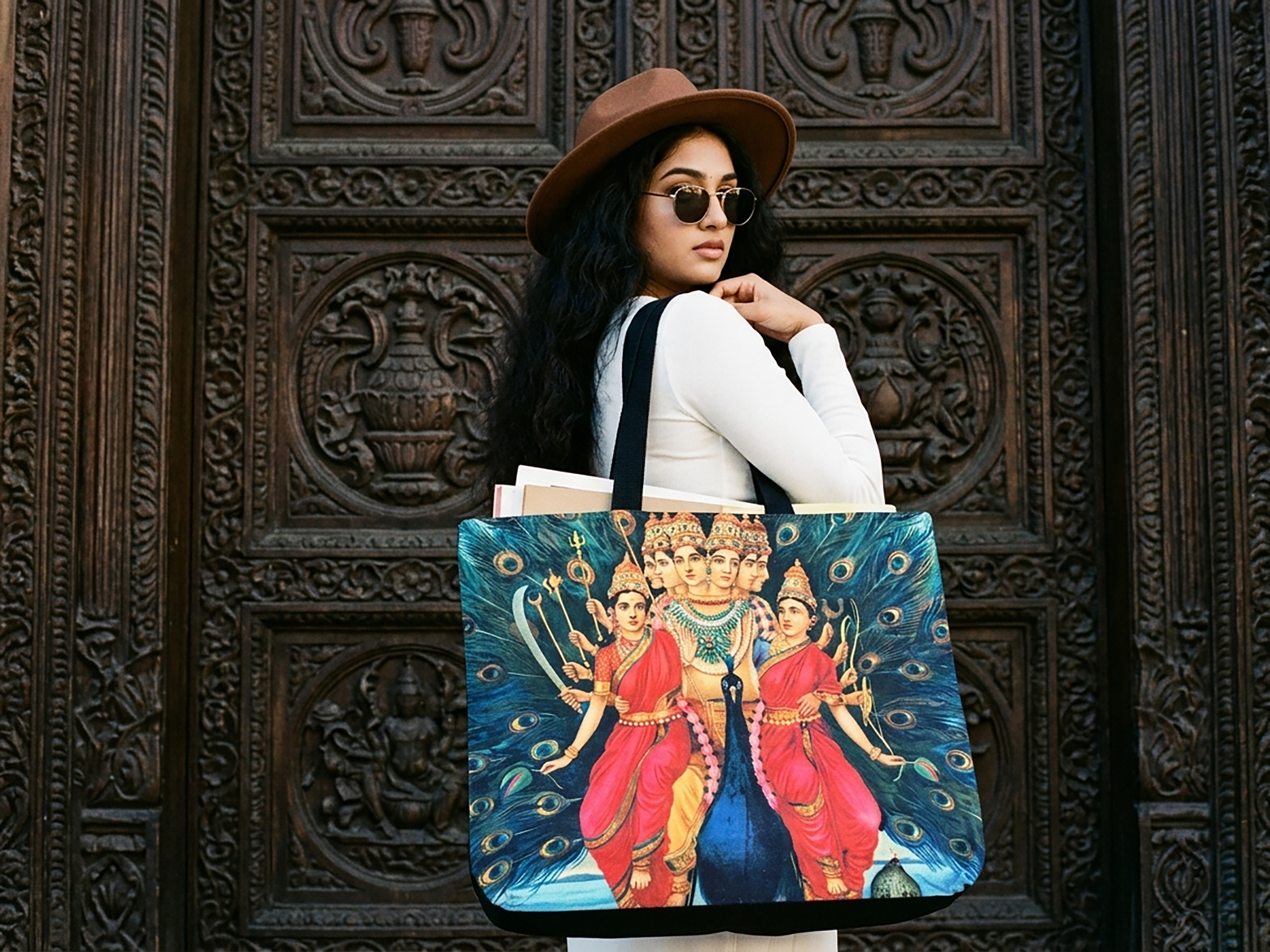 Image 1 of 8
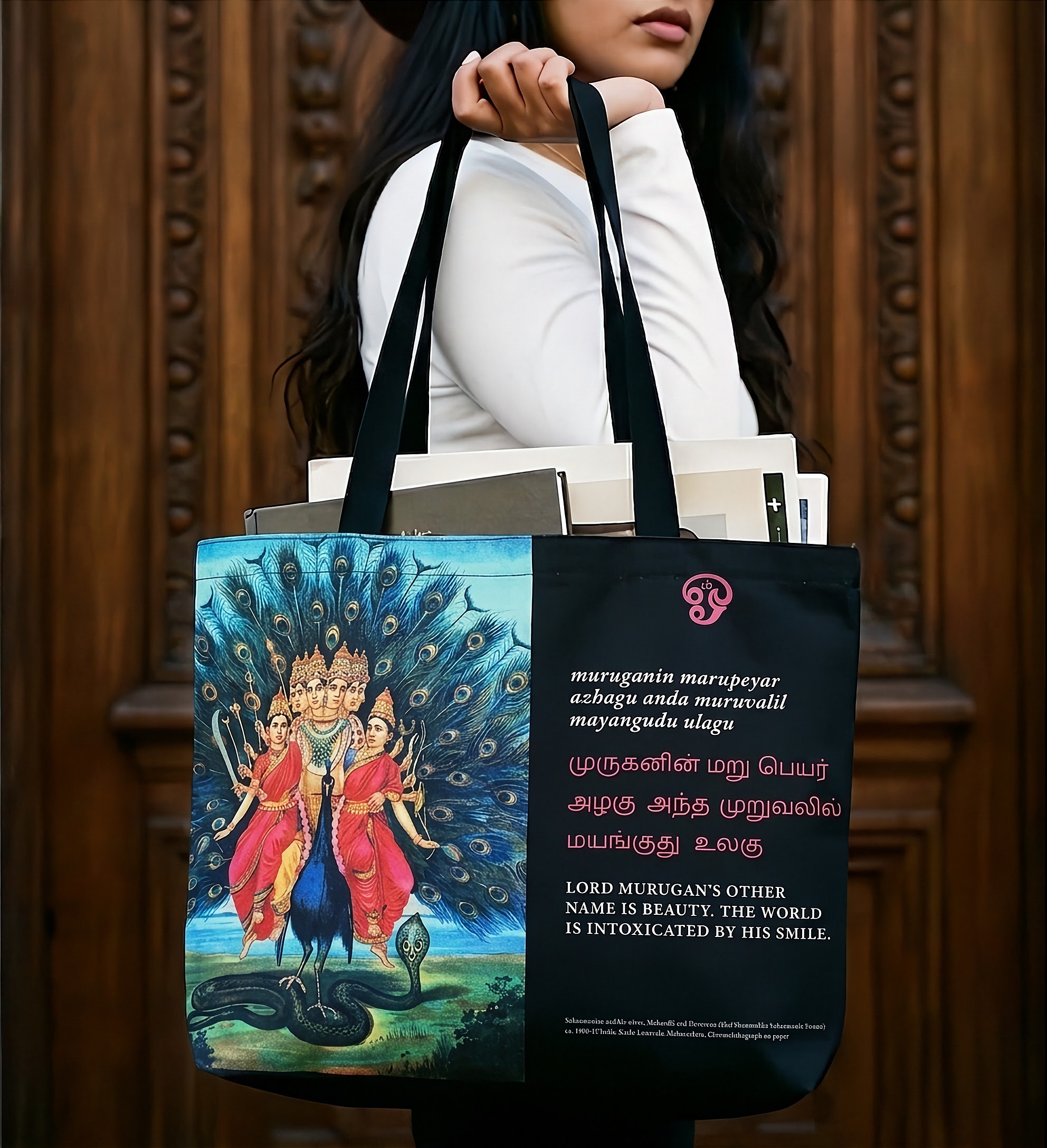 Image 2 of 8
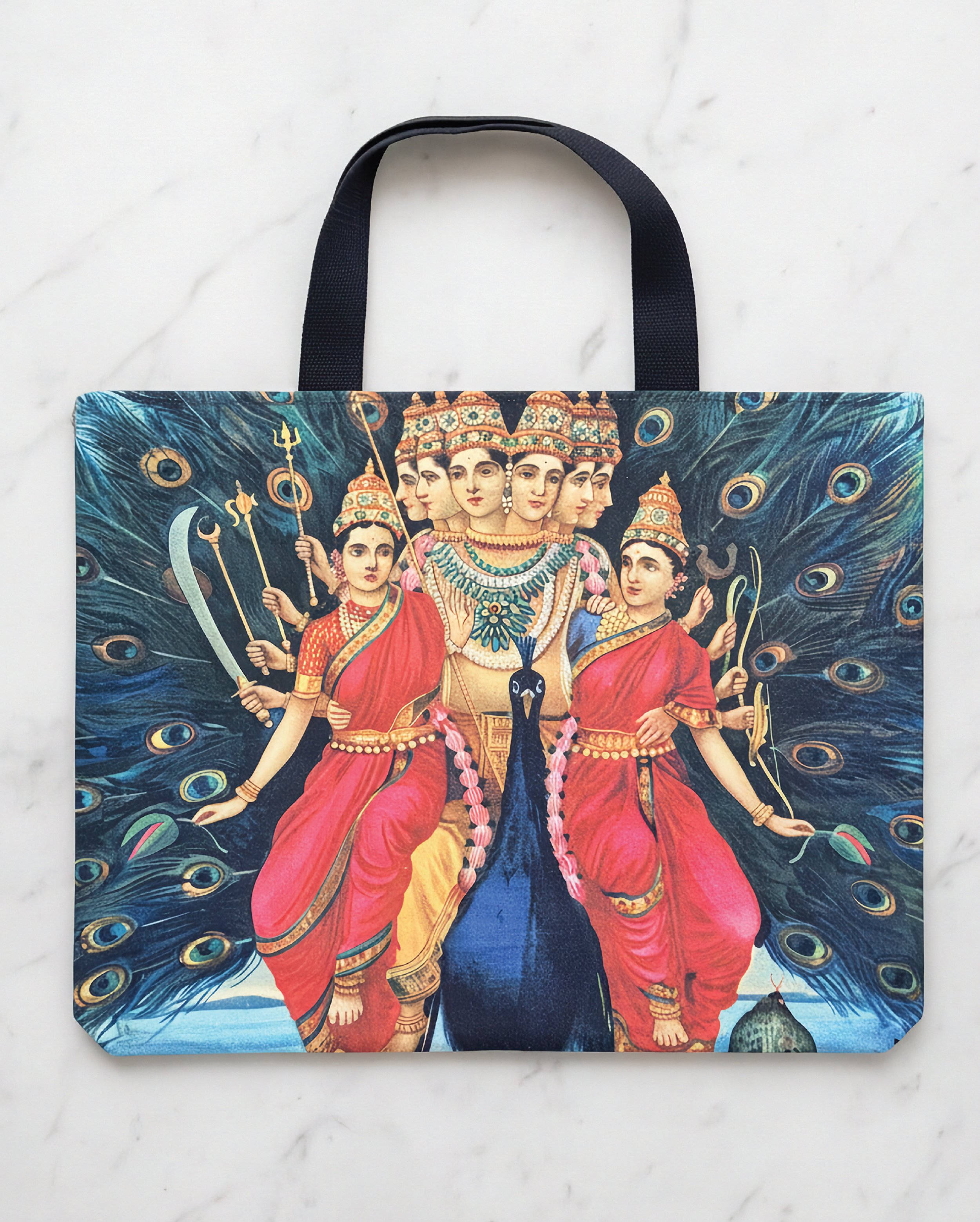 Image 3 of 8
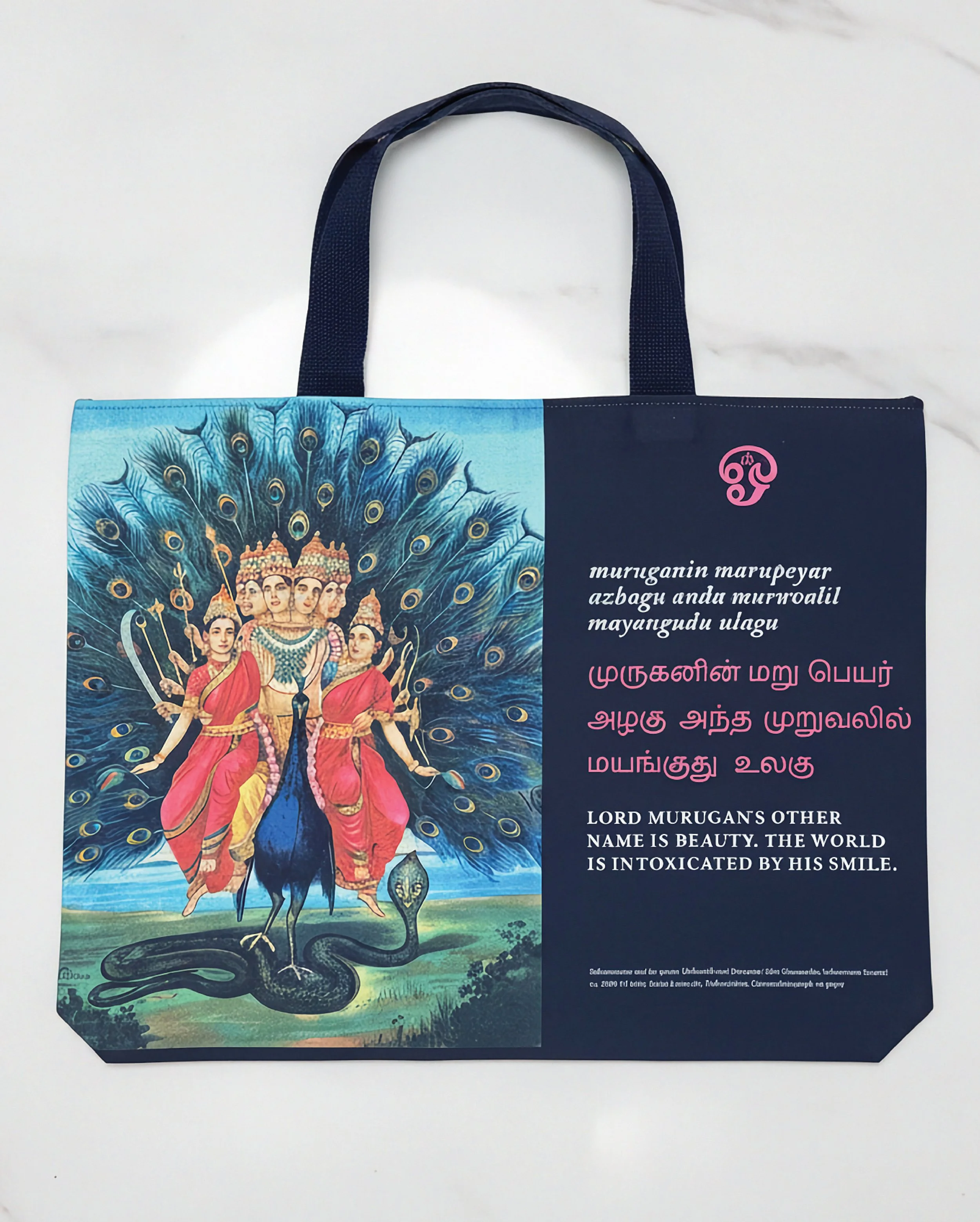 Image 4 of 8
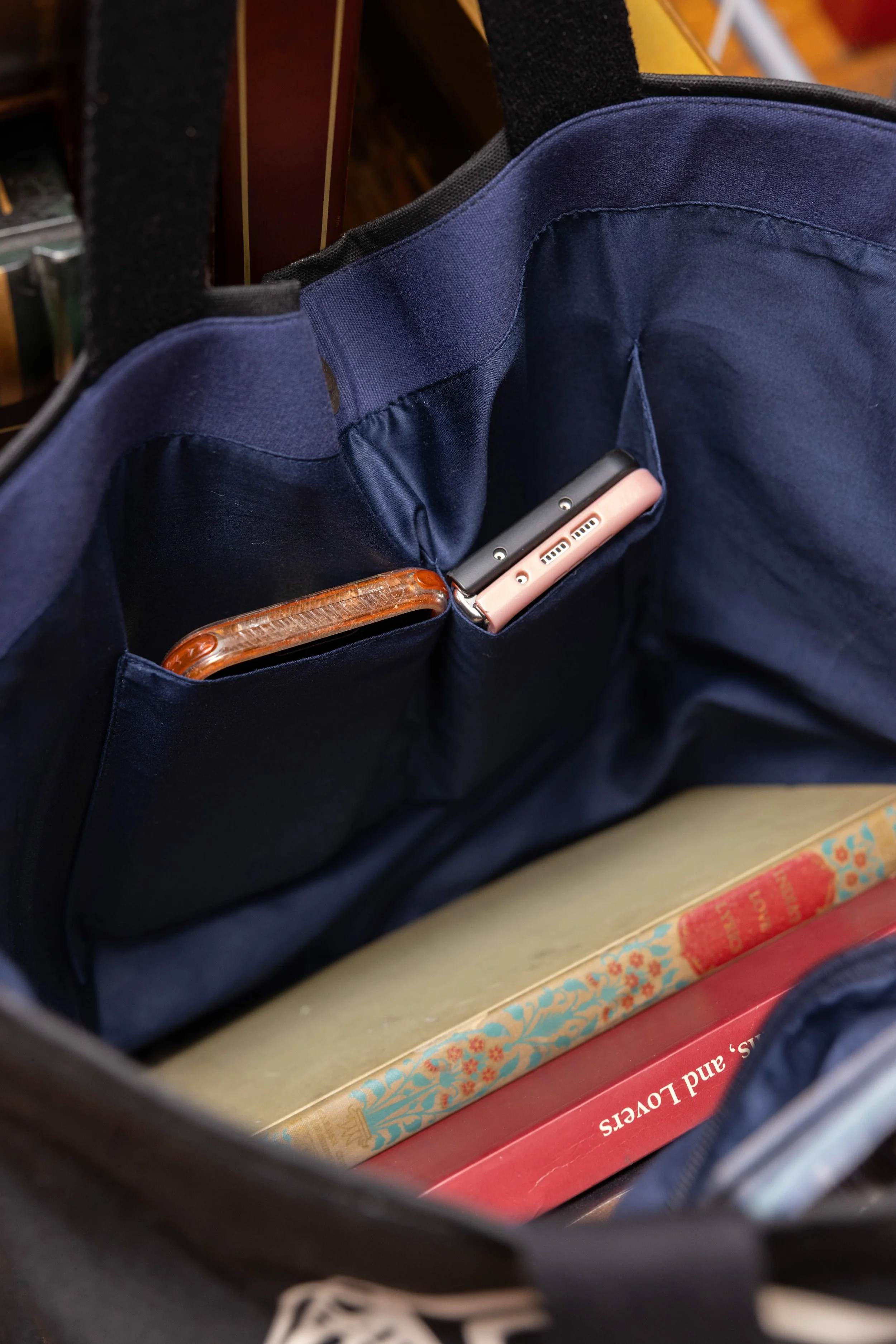 Image 5 of 8
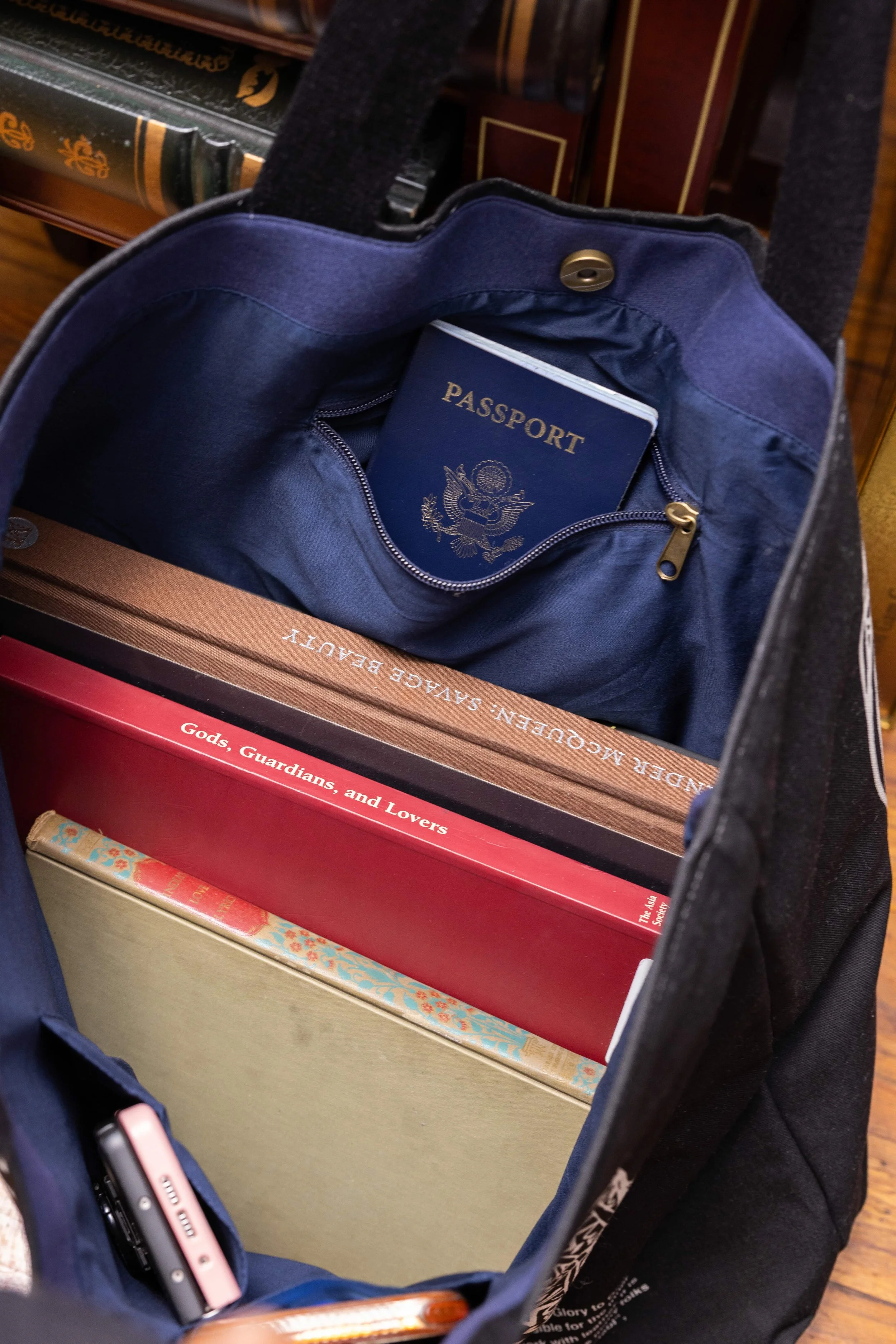 Image 6 of 8
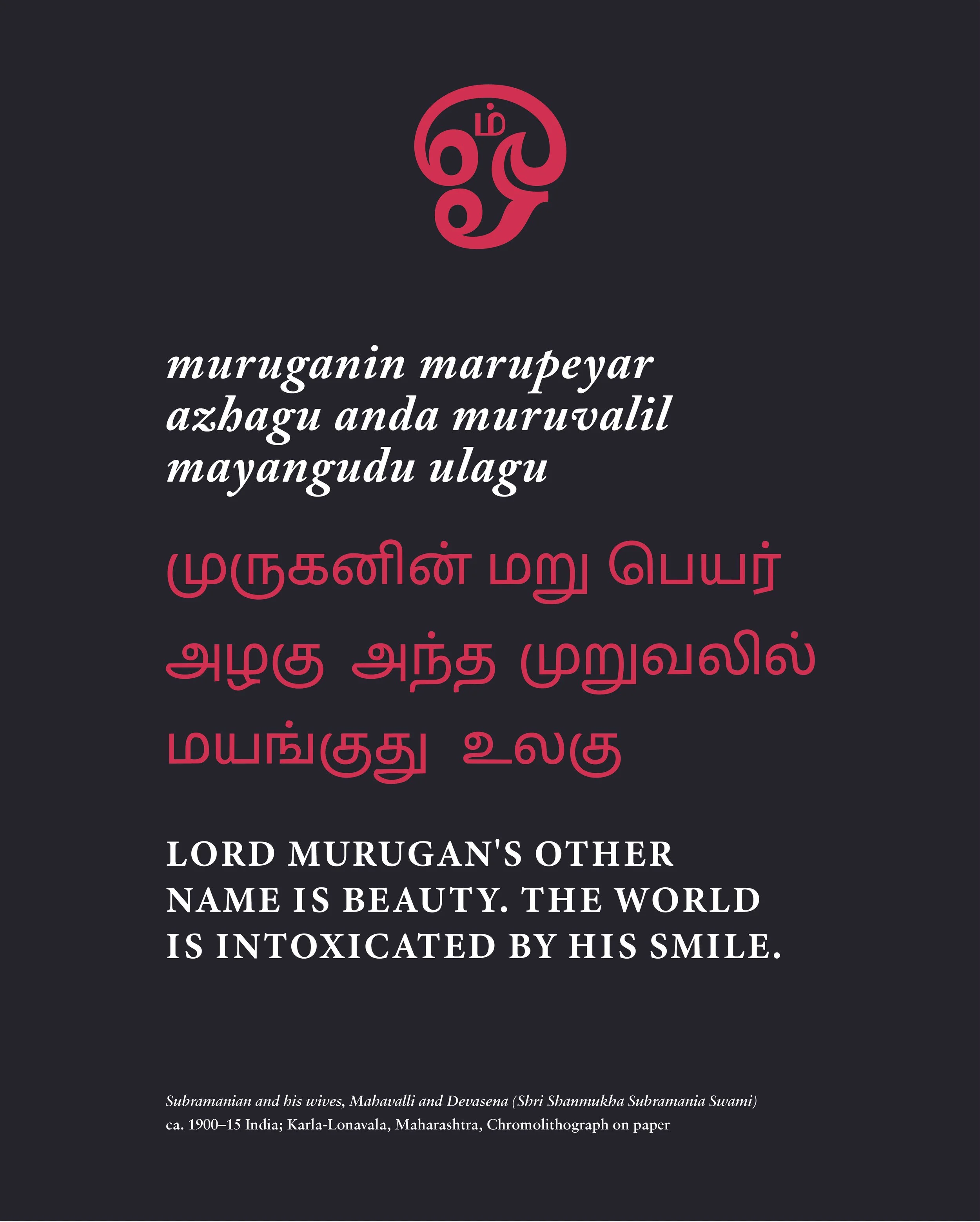 Image 7 of 8
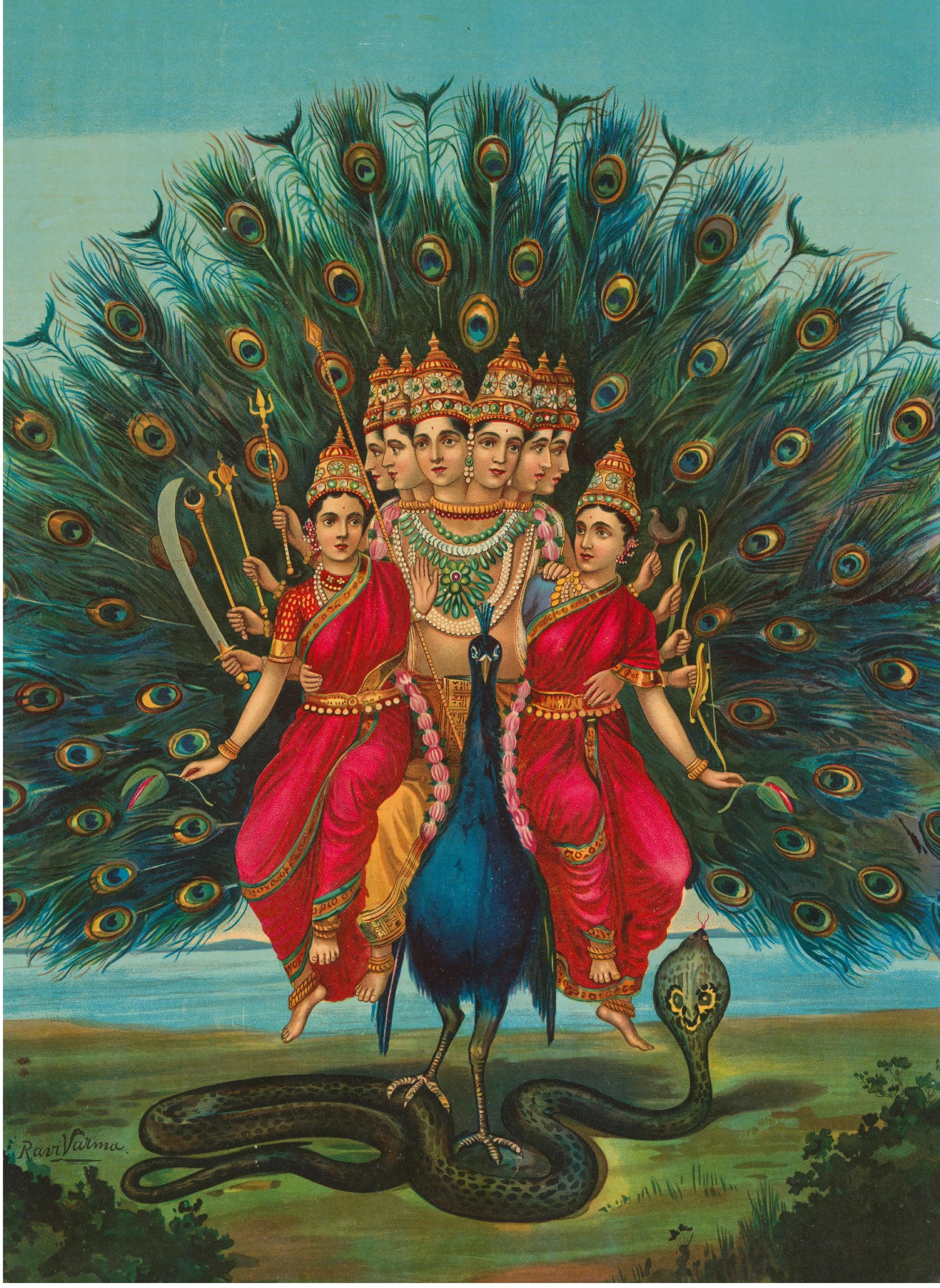 Image 8 of 8